
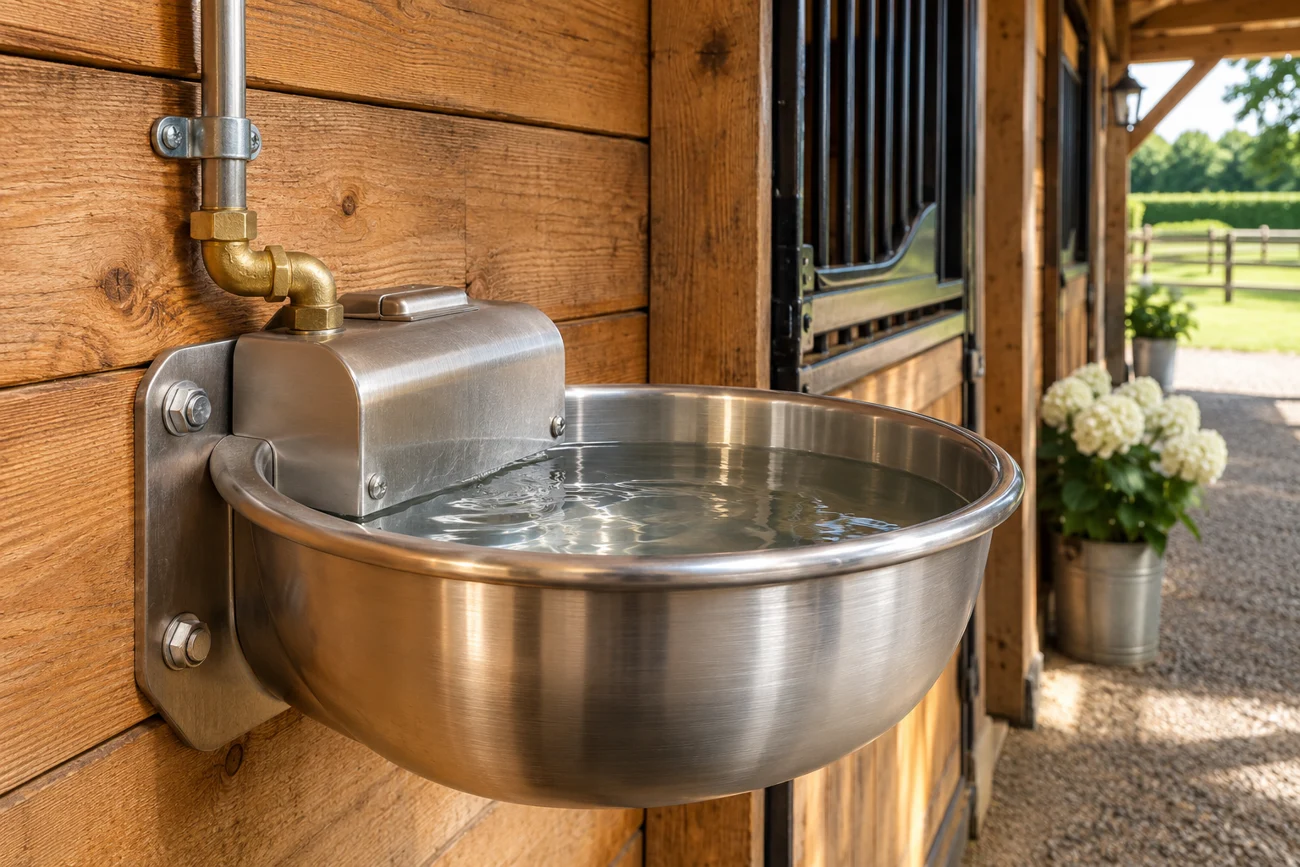
An automatic waterer can simplify daily refilling in the right setup. The useful question is whether the water supply, horse routine and maintenance plan suit your barn.
Where it may help
Busy private barns and multi-horse programs with a reliable water supply and someone checking every unit each day.
When to pause or look at alternatives
A temporary lease, unreliable plumbing or a horse whose intake must be closely measured may call for a different arrangement. Automatic refilling does not replace daily checks.
Options to understand
Stall-mounted bowls
A compact option for individual stalls. Check mounting height, cleaning access and how water intake will be monitored.
Paddock waterers
Plan capacity, placement, drainage and access for the group using them.
Heated or non-electric designs
Climate and the actual installation determine the requirements. A heated model is not automatically the best Florida choice.
PUBLISHED PRICE EXAMPLE · CHECKED NOVEMBER 3, 2026
$279 USD
One published equipment example: RAMM Automatic Stall Waterer with 100W Heating Pad, SKU ASWH. This is the listed unit price, not an installed-system quote. Tax, delivery, plumbing and electrical work must be confirmed separately.
Source: RAMM · Automatic Stall Waterer with 100W Heating Pad. A published listing is not a quotation to you. Prices and availability can change. Confirm all current inclusions with the supplier.
See research reference ↗Questions before you buy
- Who will inspect and clean each unit, and how often?
- Can the horse use the valve confidently? Is intake measurable?
- What water pressure, backflow protection, shutoffs and drainage are required?
- Are plumbing, power, installation and replacement parts included?
Where to look
Equestrian equipment retailers, agricultural water-system dealers and installers who can assess the actual water supply.
Ask for current specifications, a written total, delivery terms and relevant examples. A listing or photograph is a starting point, not proof that a product fits your project.
A useful additional reference
Ohio State’s Water for Horses factsheet discusses installation costs, acclimation and leaks. Daily inspection and a backup water plan remain important.
Reference: Ohio State University, Water for Horses (2024). Full source address is recorded in our research notes.
This is an editorial buying guide, not a hands-on product test or a paid supplier feature. Stable Arrival does not provide veterinary, engineering or installation advice.